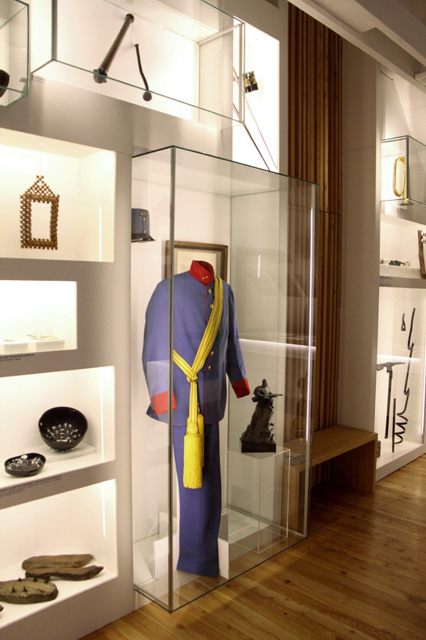
The heritage which is collected, kept, researched and presented by The Upper Carniola Museum, are intended for contemporary needs in building regional and local identity and as inspiration and help in the search for solutions to the contemporary cultural problems of people in Gorenjska and more widely. We build our mission on the basis of the core collections: archaeological, ethnological, older, art, cultural and more recent history and the contemporary, the cabinet of Slovenian photography, the visual creativity of Gorenjska and the prešerniana. The museum is oriented towards constant communication with its environment – we present the heritage with exhibitions, publications, at workshops, study circles and lectures.
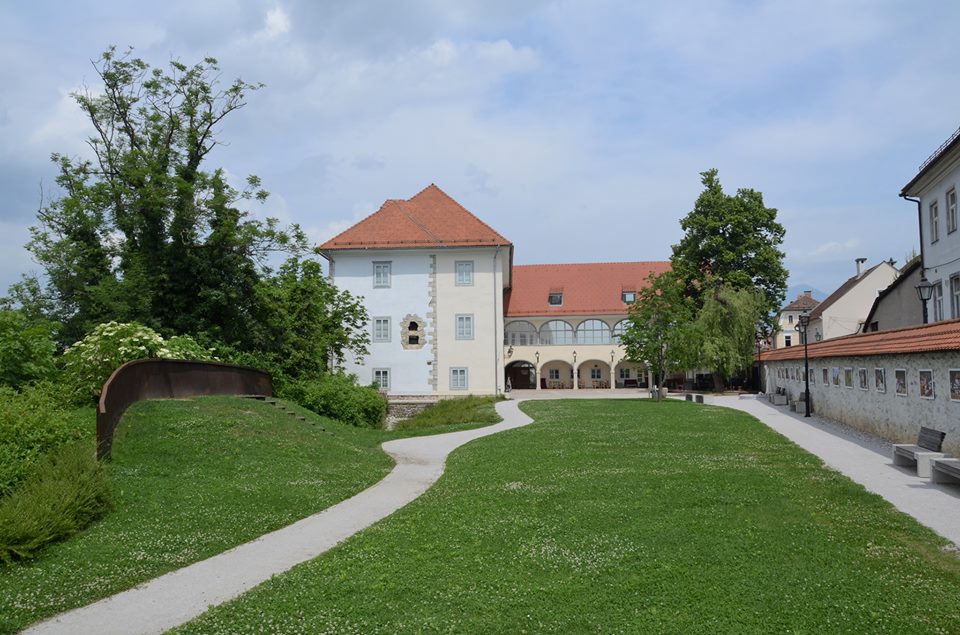
The Upper Carniola Museum is a place where people meet who know how to find in the preserved cultural heritage those common features which connect us with other peoples and cultures, and at the same time to bring out those treasures that are ours alone. Among our friends we count both the children who romp and enjoy themselves at our creative workshops and established researchers, together with whom we shape images of Gorenjska in the past. And of course all the curious visitors between these two extremes – you too are welcome!
Opening hours:
– from Tuesday to Sunday, between 10 and 18
– Monday – CLOSED
– 1. 1., 1. 5., 1. 11., Easter, Christmas – CLOSED
Admission:
|
Ticket
|
Price
|
|
Adults
|
2.50 €
|
|
Children, secondary pupils, students, pensioners
|
1.70 €
|
|
Family
|
5.00 €
|
|
Museum ticket for all houses – adults
|
6.00 €
|
|
Museum ticket for all houses – children, secondary pupils, students, pensioners
|
4.00 €
|
|
Museum ticket for all houses – family
|
12.00 €
|
|
GROUPS
|
|
Adults – over 10 people
|
2.00 €
|
|
Children, secondary pupils, students, pensioners – over 10 people
|
1.50 €
|
|
A guided tour of Prešeren's grove or of Kranj per person – over 10 people
|
1.00 €
|
Gorenjska Museum Kranj.
Khislstein Castle
Tomšičeva 44
4000 KRANJ
Tel.: 059 096 631

The castle, in the middle of the town centre of Kranj, stands above the crossing over the Sava, on part of the town promontory, where there was a fortified area from antiquity to the early Middle Ages. A wall stood here already 1500 years ago. In 1256 the Ortenburgs obtained the land and built a fortification on it. After their extinction in the 15th century it passed into the ownership of the Counts of Celje, and after the death of the last Celje count it fell to the Habsburgs.
The castle building came into being between the 15th and 19th centuries, while the castle acquired its present appearance in the 17th century. The south-eastern part of the castle arose in the time of the Turkish incursions. It was fitted into the town defensive wall as a constituent part of it. In the south-western part a defensive tower was built at the beginning of the 16th century, to which a two-storey residential building was later added. In the middle of the 16th century the castle was bought by the entrepreneur Janž Khisl of Fužine near Ljubljana, who in 1578 rebuilt it into a noble manor, which was named Khislstein after him. Later owners of the castle were among others the Mosconi, the counts Barbo and the Auerspergs. At the end of the 18th century the castle was bought by Natalis Pagliaruzzi, and his successors kept it until 1913, when it became municipal property.


Khislstein Castle is adorned by the courtyard and main portals, which arose in the second half of the 16th century, while the courtyard wing with arcaded corridors is the result of rebuildings in the 18th and 19th centuries.
Until 2008 the Gorenjska Museum had its premises in Khislstein, after which the owner of the castle, the City Municipality of Kranj, began the restoration with the help of European funds.
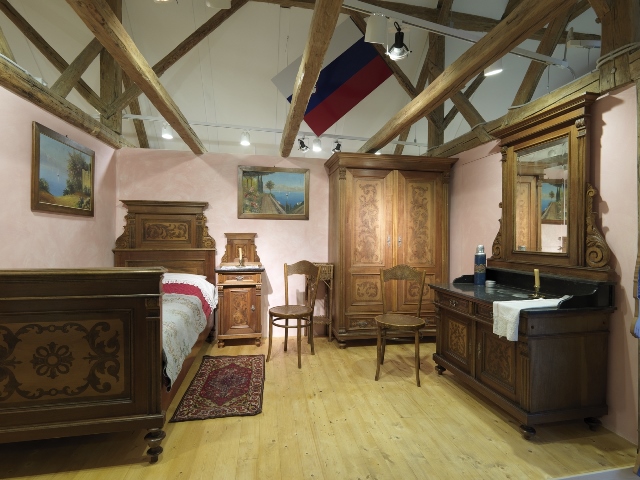
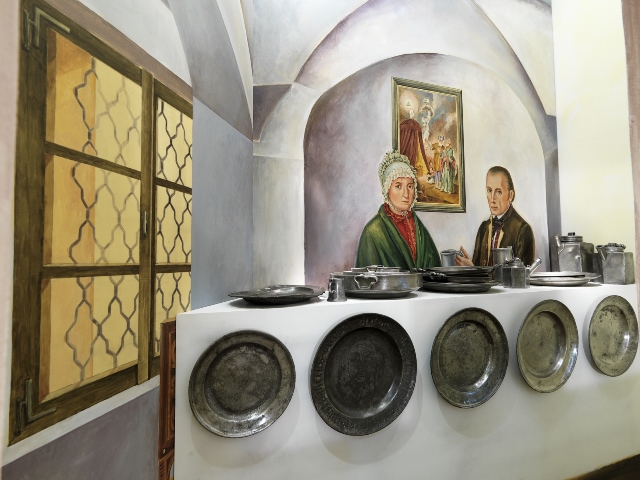
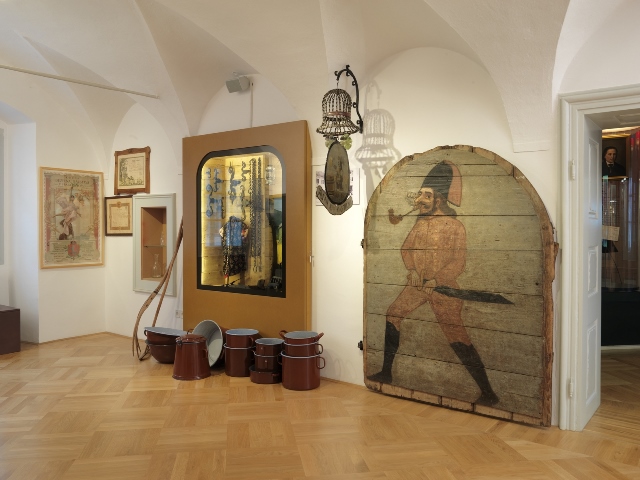
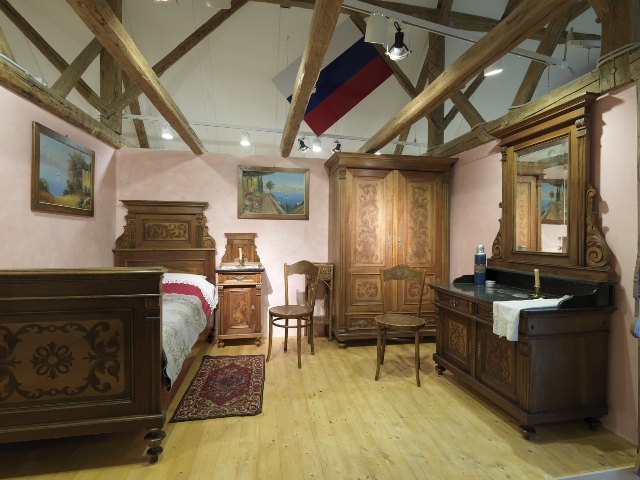
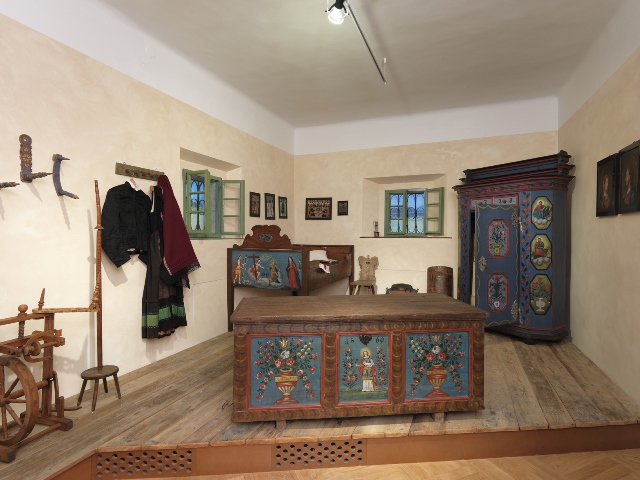
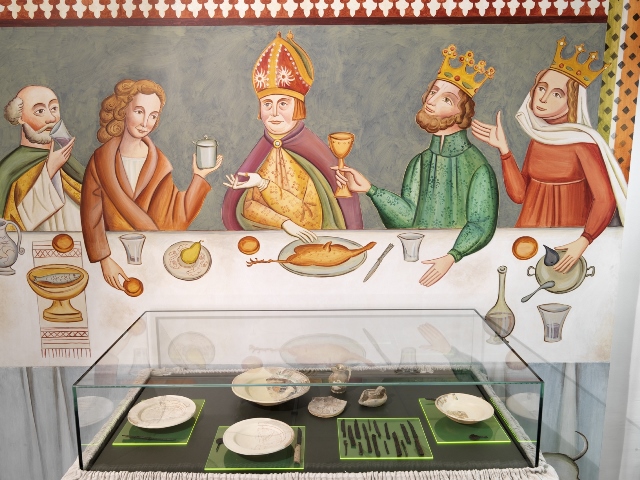
The renovated premises of Khislstein Castle are dedicated to the new permanent exhibition Beautiful Gorenjska, which takes the visitor through the main turning points of life in Gorenjska, from the early Middle Ages to today. The exhibition story first shows the characteristics of the Gorenjska landscape, takes us to the time of the settlement of the Slovenians, and teaches us about life in the castles and the hardships of the peasant population. It acquaints us with the image of old Kranj, and we also learn how people once travelled and transported goods. The exhibition devotes much attention to trade and the beginning of the industrial age, which strongly influenced the development of Kranj. The climax of the exhibition is dedicated to the 19th century, where, as if on the altar of the homeland exceptional individuals from Gorenjska are presented, who importantly contributed to the shaping of Slovenian national consciousness and identity. Visitors can among other things enter a peasant chamber, get to know a bride's trousseau and admire the refinement of a bourgeois salon from Prešeren's time.
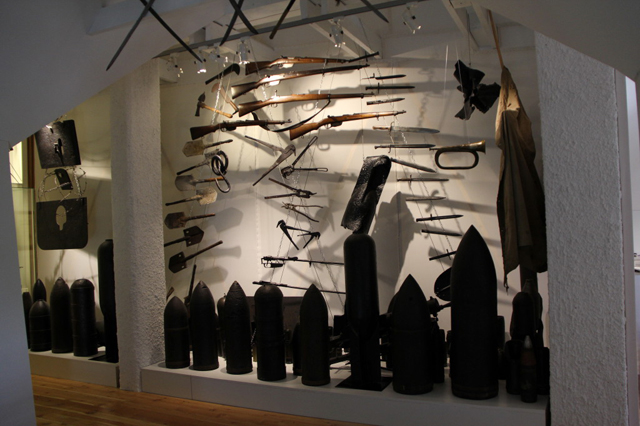
The story of the new permanent exhibition also touches on the memory of the misery of factory workers and the horrors of both world wars. It shows the excellent industrial achievements of Gorenjska companies and factories. In the exhibition the 10-day war of independence in 1991, in which Gorenjska played an important role, also has its place. The museum walk through time concludes with Slovenia's entry into the European Union.
In the castle there are also a specialist museum library and an educational room for our youngest.
A few glimpses of the permanent exhibition BEAUTIFUL GORENJSKA:






The Town Hall
Glavni trg 4
4000 KRANJ
Tel.: 04 201 39 80
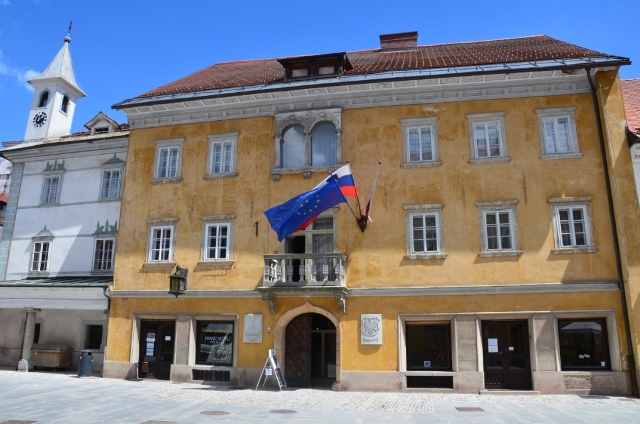
The Town Hall in Kranj is one of the most important architectural monuments in Slovenia. It acquired its present form through the joining of two buildings:
– the older part, which borders on Poštna ulica, is first mentioned in the 1st half of the 16th century. On the ground floor is the late Gothic Pillared Hall from the beginning of the 16th century, which was originally intended for storing the fair goods of merchants from distant places.
– the central part of the building with the main entrance is one of the most distinguished Renaissance manors in Slovenia. By its origin it belongs to the beginning of the 17th century. The hall ceiling on the ground floor and the first floor is adorned by a decorative net vault. The Renaissance hall on the first floor is today the wedding hall. It is adorned by an inlaid door with the date 1638 and a wooden coffered ceiling in Renaissance style. In the entrance hall, in 1965, Old Slavic graves and a hearth from the 9th and 10th centuries were discovered.
In the Town Hall three permanent exhibitions are on display: the collection of the sculptor Lojze Dolinar (1893 – 1970), the archaeological The Iron Thread and the ethnological Folk Art in Gorenjska. On the ground floor there is also a gallery, intended for temporary museum and art exhibitions.


Lojze Dolinar (1893–1970) is among the central representatives of Slovenian sculpture of the 20th century. He is considered one of the leading representatives of realism, Secession, expressionism, the new objectivity and of socialist realism in Slovenian sculpture. More than 500 of Dolinar's sculptural works are known. He successfully established himself with portrait, small-scale, monumental, funerary and architectural sculpture. He realised some of the largest monument commissions; most of the public and architectural sculptures in Ljubljana are his work.
Dolinar's last great monumental work was the Monument to the Revolution in Kranj (1961), where he moved after retiring. In 1966, in the lower and upper hall, the Dolinar Gallery was arranged with a selection of 37 sculptures and 15 prints, which Dolinar donated to the municipality of Kranj.
In the permanent exhibition Dolinar's sculptures from the period after the Second World War predominate. Among the frequent motifs of the fifties and sixties of the last century are the seated, standing or dancing human figure or figural group, the nude and mother with child. In the middle of the fifties several »palaeolithically« lush female nudes of Brač marble were created, which Dolinar first modelled in clay, and on his instructions assistants carved them into the stone. In the second half of the fifties he made several »bell-shaped« figures of fired clay.
The Iron Thread
In the wish to keep a living link between the landscape and the human being, besides the exceptional fossil finds of fish and a mammoth from Bobovek and a bison from Leše, we have also shown the geological layers that formed over millions of years.
The permanent archaeological exhibition takes the visitor from the cultures of the Old Stone Age to the New Stone Age, when the human being made permanent dwellings, domesticated animals and began to work the land. There follows a presentation of the Bronze and Iron Ages, when the human being discovered the usefulness of copper, bronze and finally iron. With the arrival of the Romans, prehistory in our lands ends and the period of antiquity begins. In the last room of the exhibition the time of migrations is presented, when Carnium becomes Kranj. The latest discoveries from Lajh can also be seen. The most prestigious find was the grave of a woman with a gold ring, a silver gilded bracelet, two round gold clasps with almandines, two silver and gilded bow brooches, a necklace of amber beads, an iron knife etc. -which was the characteristic dress above all of Alemannic, Germanic women of the 6th century AD. Among the greatest discoveries are the lavish equipment and weapons from Bašelj, which prove the presence of the Old Slovenian noble aristocracy of the principality of Carniola.
Folk Art in Gorenjska
Gorenjska folk art grew and developed from the roots of domestic tradition, and also from impulses that came into the village environment from the art of the wealthier social strata. The influences of neighbouring lands, which the Gorenjska person absorbed into their culture, connect us with the wider circle of the eastern Alpine lands. A special value in the interior furnishing of Gorenjska peasant homes was painted furniture. Especially numerous are the painted chests, which quite flood the exhibition. According to the practical value of the objects in life, the exhibition is arranged in four rooms: Gorenjska folk building, the interior furnishing of dwellings, the festive and working environment of the Gorenjska person and their spiritual culture.
Prešeren's house
Prešernova 7
4000 KRANJ
Tel.: 04 201 39 83

In the house where from autumn 1846 until 8 February 1849 the most important Slovenian poet Dr France Prešeren (1800 – 1849) lived, a memorial museum was opened on 8 February 1964.
The house consists of two parts with a common courtyard. The construction of the buildings dates to the time of the late Gothic, and in the 17th century they were joined into a single building with a wooden corridor, as the preserved console ending proves. After the fire of 1811 the wooden corridor was replaced by an arcaded corridor. In 2000 / 2001 the house was generally renovated, and at the same time a new permanent exhibition was renovated and set up in a modern way, showing the poet's life from his birth in Vrba, his schooling in Vienna, his life in Ljubljana and his death in Kranj.
Prešeren rented in Kranj a flat in the house that bore the designation Town 181. The house was the property of the Kranj merchant and brewer Franc Mayer. In the lower rooms, where today there is the gallery, was the first Kranj café, kept by the Swiss Florian Pua. The poet had the entrance to the house from today's Tavčarjeva ulica to the first floor. The rooms towards today's Prešernova ulica were living rooms (kitchen, Katrina's room, Prešeren's room and the room of Andrej Rudolf), while he had his lawyer's office towards Tavčarjeva ulica, which in his time was called Svinjska ulica.
Two rooms are furnished with authentic furniture: the poet's bedroom and the lawyer's office.
On display are: the censored manuscript of Poezije from 1847, the original and a facsimile of Krst pri Savici, newspapers in which the poet published his poems (Carniola, Illyrisches Blatt, Kmetijske in rokodelske novice, Krajnska č’belica). As an artistic complement, the room is adorned by portraits of his two friends, Matija Čop and Andrej Smole, and by the portrait of his unrequited love Julija Primic. We also exhibit the poet's first pictorial depiction from 1850. The author of the portrait was Goldenstein, who painted the poet from memory. Three peaks in his life are especially highlighted: the Wreath of Sonnets, Krst pri Savici, the publication of Poezije. His poem Zdravljica is exceedingly important for Slovenian national identity, since today, when we Slovenians are an independent nation, a stanza of this poem is also our anthem. Dr France Prešeren published his poems, among others, also in Kmetijske in rokodelske novice, whose editor was a fellow Kranj native, Dr Janez Bleiweis, noble of Trsteniki. His portrait from the brush of Ivan Franke is exhibited in the former room where Andrej Rudolf lived. The museum acquired the portrait as a donation from the great-great-great-grandson of Andrej Bleiweis.
In the exhibition it is also possible to see quite a few books and modern media about Prešeren's life and work, and at the same time a great many translations of his poetry into foreign languages. We are proud that Prešeren is read also in Chinese and Bengali.
In the ground-floor rooms of Prešeren's house, where the gallery is, a varied exhibition activity takes place.
The Oplen house below Studor, Bohinj
Studor 16
4267 Srednja vas v Bohinju
Tel.: 05 922 67 74

The Oplen house is a Bohinj homestead of the elongated type, which under a common roof joins the dwelling and the farm premises. It is one of the few houses in which it is still possible to light a fire on the hearth of the black kitchen. The building is of masonry combined with wood. The access by a bridge to the barn above the stable is led past the residential part, which is a characteristic Bohinj peculiarity.
The residential part consists of a hall with kitchen, the house and a chamber, an attic and a cellar. The black kitchen, to which conservation work has returned its original appearance without a chimney, is separated from the hall only by a vault – the šipovnik. In it there are three fireplaces: an open hearth, a firebox for the stove and a built cauldron for cooking pig feed. Today too, as in the last century before the chimney was added, the smoke rolls under the ceiling into the attic, and the šipovnik determines its lowest level. The house is the central living space with a table under the God's corner, benches and a tiled stove with a sleeping place above it, the so-called pugart. In the last century they wove in the house in winter time, to which the exhibited house loom testifies today. The chamber was above all a bedroom and, as an old document proves, also a room for those on life annuity. Grain, produce, clothing, footwear, tools and the like were kept in the attic, the so-called ispa, in partitions and chests.
In the last century a considerable amount of arable land was joined to the house, to which the stable, barn and special store for litter, large for the conditions of the time, testify. The last owners possessed only little land and more forest, and of livestock they kept only a few goats, for which they stored hay and leaf fodder in the barn.
In the barn, as in the past, peasant tools and implements are stored – a cart, a ladder wagon, harrows, a manure basket, tools for splitting shingles and repairing wooden objects, a grindstone … Most of the exhibited equipment and all the furniture is the bequest of the last owners.
The present building was probably erected at the beginning of the 19th century, and it was put up in place of an older wooden house; in building the cellar ceiling a beam with three small windows was used. In archaeological sounding in the hall and kitchen several coins from the nineteenth century were found. During the restoration an offering hollow was found on the lower supporting beam in the God's corner and an animal jaw in the wall by the steps to the cellar, which probably represents an original way of protecting the house from misfortune.
The house was opened to the public in 1991.


Opening hours:
- from 26. 12. to 30. 6. and from 1. 9. to 25. 10.: every day except Monday, between 10 and 12 and between 16 and 18
- from 1. 7. to 31. 8.: from Tuesday to Sunday, between 11 and 19
- from 26. 10. to 25. 12. – CLOSED
- Monday, 1. 1., 1. 5. – CLOSED
Admission:
|
adults
|
2.50 €
|
|
young people
|
2.00 €
|
|
group
|
– 10 %
|
| |
|
|
PRESS, SMD, ICOM
|
FREE OF CHARGE
|


The Alpine Dairy Museum in Stara Fužina, Bohinj
Stara Fužina 181
4265 Bohinjsko Jezero
Tel.: 04 577 01 56
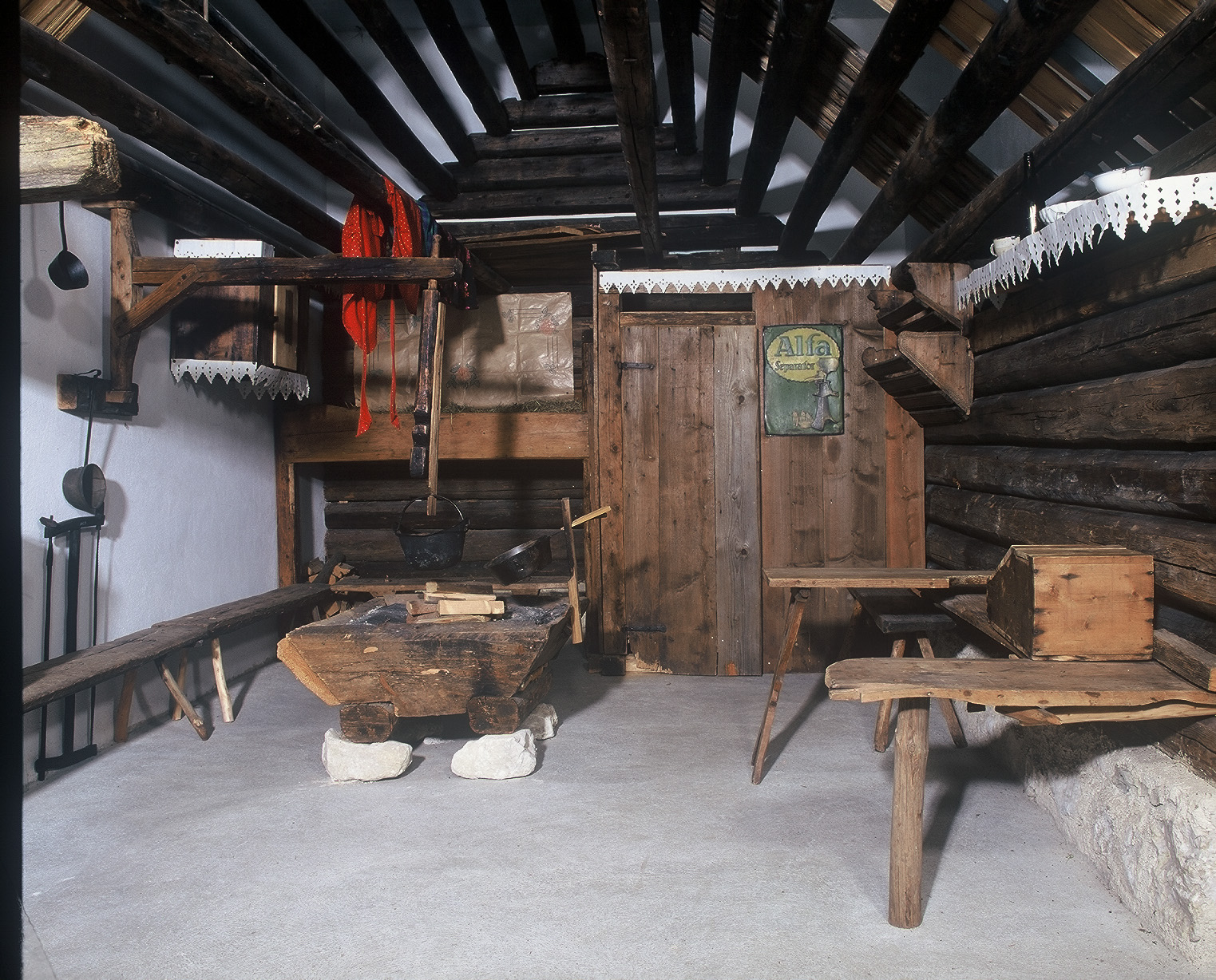
For centuries Bohinj was the strongest Alpine-pasture centre. Here there are the most mountain pastures; the highest pastures reach just below the summit of Triglav. In Bohinj Alpine dairying with milk production was developed in its most intensive form. From May to the middle of June the herdsmen moved with the livestock to the lower and from there to the high pastures, and in autumn they returned to the valley again. At Uskovnica, for example, they stayed right until Christmas.
The Alpine Dairy Museum in Stara Fužina was opened in 1971. It is arranged in an abandoned village cheese dairy, built in 1883, where cheese was still made in 1967 and where in summer master cheesemakers took care of the ripening of the great wheels of cheese, which porters brought down from the pastures every week. In 1990 we supplemented and rearranged the museum in terms of content.
In the first room a wooden herdsman's hut with interior furnishing from the Zajamniki pasture is shown. On the entrance façade of the hut the date 1849 is barely visible. In the last two decades the hut was used only at haymaking time and during woodcutting work.
In the second room the original cheesemaking workshop with two large built-in cheese cauldrons and a press for shaping the wheels of cheese is preserved. Original objects of the interior furnishing of cheese dairies are exhibited (cheesemaking tools and utensils, milk vessels, churns for making butter), a large cauldron on a wooden swivel from the cheese dairy on the Blato pasture. In a display case is a large »dairyman's« back-basket, equipped with the necessities the herdsmen carried with them every year at the moves to the pastures. Photographs show the cheese dairies and cheesemaking work in the pastures, the transport of cheese into the valley, and also documentary records related to the organisation of cheesemaking.
At the entrance to the museum there is a cartographic display of the oldest mentions of the pastures (the first reaches back to the year 973), a graphic sheet with house marks with which the farmers marked their tools and vessels. Photographs show the characteristic Bohinj herdsmen's settlements and characteristic herdsmen's buildings. On the high pastures, where they only graze, characteristic are the single-cell wooden huts on pillars, which join below a space for the livestock and above the herdsman's dwelling. On the lower pastures the farmers have a special building for the herdsman and a special building for the livestock – the »byre«, which in the roof part they also use as a store for hay, which they obtain on these pastures; alongside the common grazing land the farmers also have individual mowing land.
In the fourth room portraits of herdsmen are shown, who for four and more decades cared for the livestock in the pastures, further the herdsmen's migrations, the herdsman's working day, his food and his free time, and finally also the Bohinj Cows' Ball, the traditional Bohinj tourist event, which took root from a herdsmen's presentation at the end of the grazing season.


Opening hours:
- from 26. 12. to 30. 6. and from 1. 9. to 25. 10.: every day except Monday, between 10 and 12 and between 16 and 18
- from 1. 7. to 31. 8.: from Tuesday to Sunday, between 11 and 19
- from 26. 10. to 25. 12. – CLOSED
- Monday, 1. 1., 1. 5. – CLOSED
Admission:
|
adults
|
2.50 €
|
|
young people
|
2.00 €
|
|
group
|
– 10 %
|
| |
|
|
PRESS, SMD, ICOM
|
FREE OF CHARGE
|
THE TOMAŽ GODEC MUSEUM
Zoisova 15
4264 Bohinjska Bistrica
telephone:04 577 01 42, 041 864 726,
email: anja.postrak@gorenjski-muzej.si
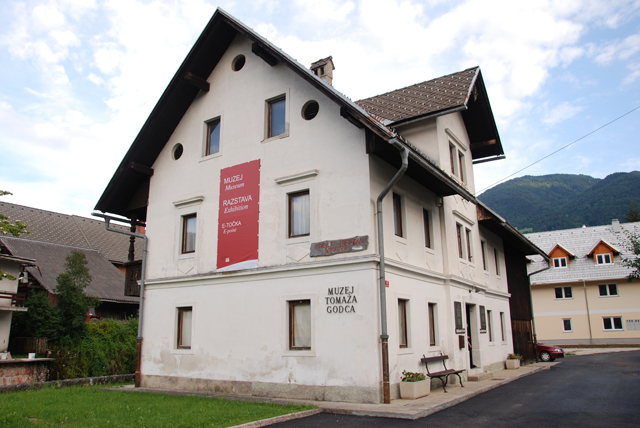
In the Godec house in Bohinjska Bistrica, where there was once a tannery workshop, a museum has been open since 1979. The museum bears the name of the former owner Tomažu Godcu (1905 – 1942), a trained tanner, an excellent sportsman, an organiser of skiing, mountaineering and tourism in Bohinj. He was one of the organisers of the so-called Bohinj uprising in 1941 and was shot as a hostage in Mauthausen.
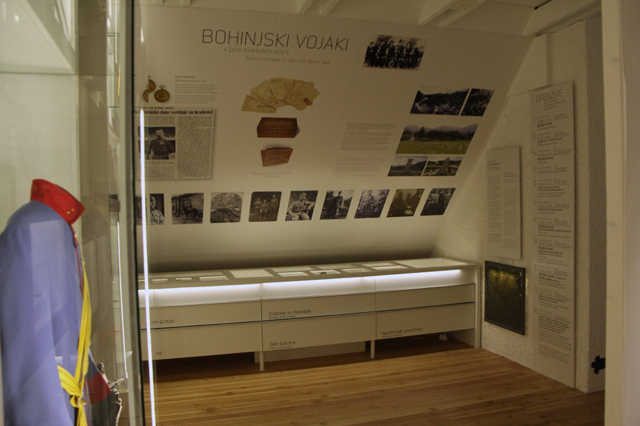
In the Tomaž Godec Museum we are preparing a presentation of the whole history of Bohinj, from the first settlement in the Iron Age right up to the Second World War. Since June 2015 museum visitors can see the part of the exhibition dedicated to the 1st and 2nd World Wars, and from autumn 2015 onwards, by visiting the tannery of Tomaž Godec they will be able to acquaint themselves with the processing of hide into leather. In the coming years, with the upgrading of the exhibition, the rich cultural heritage of Bohinj will be presented. Visitors are also invited to see interesting temporary exhibitions and occasional adult-education and pedagogical workshops.
Opening hours*:
until 31 May: Friday, Saturday, Sunday: 10h-12h and 16h-18h
1.6.-25.10.: every day except Monday, 10h-12h and 16-18h.
26.10.-25.12.: closed
*THE OPENING HOURS ARE VALID FOR 2015.

The Tomaž Godec Museum
 |
 |