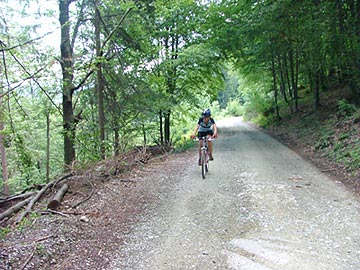
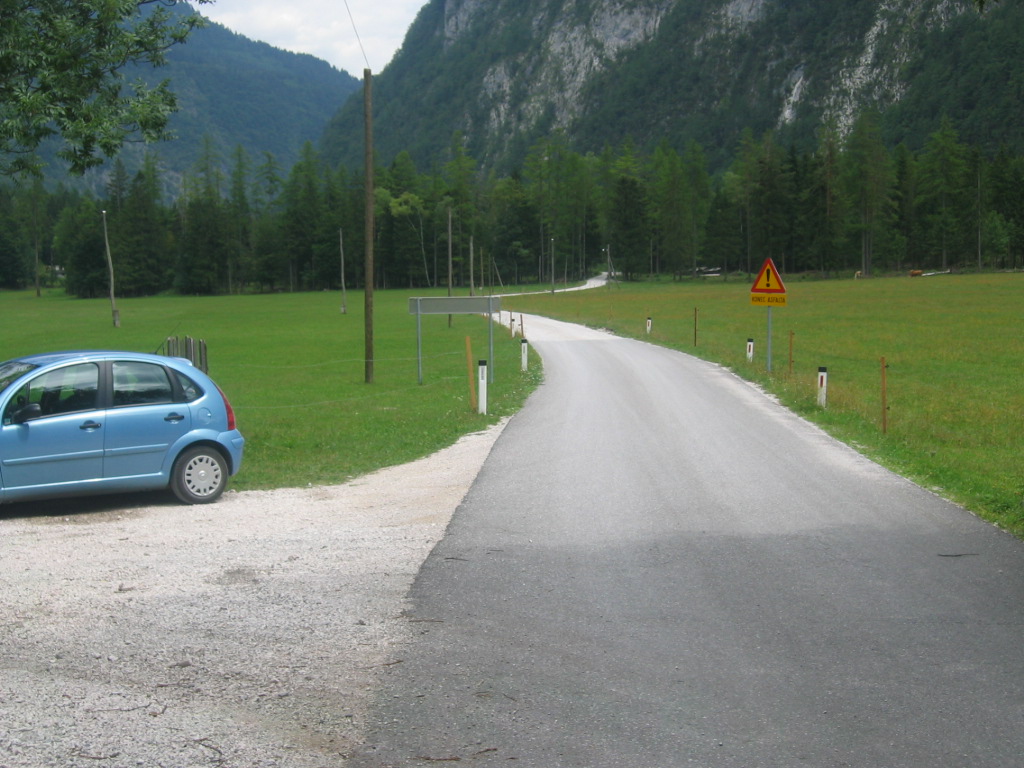
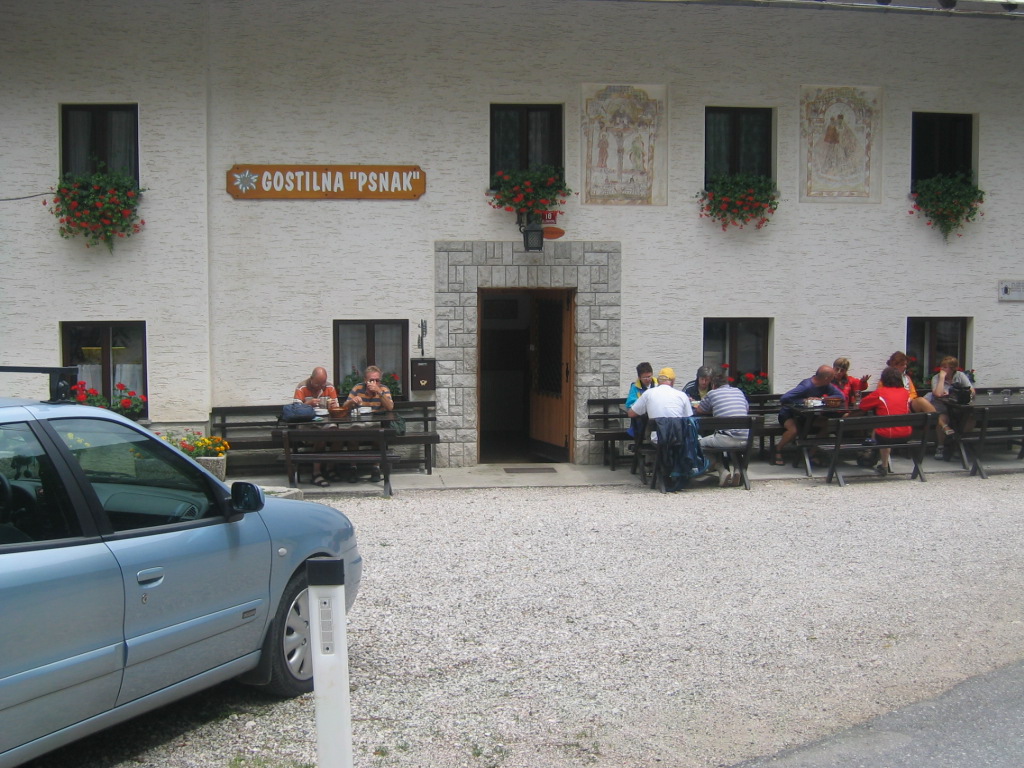
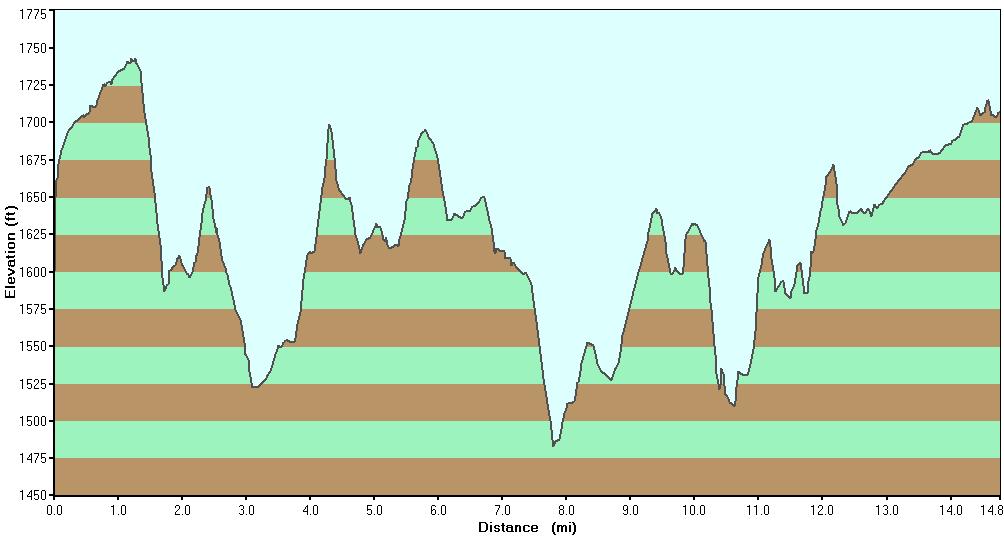
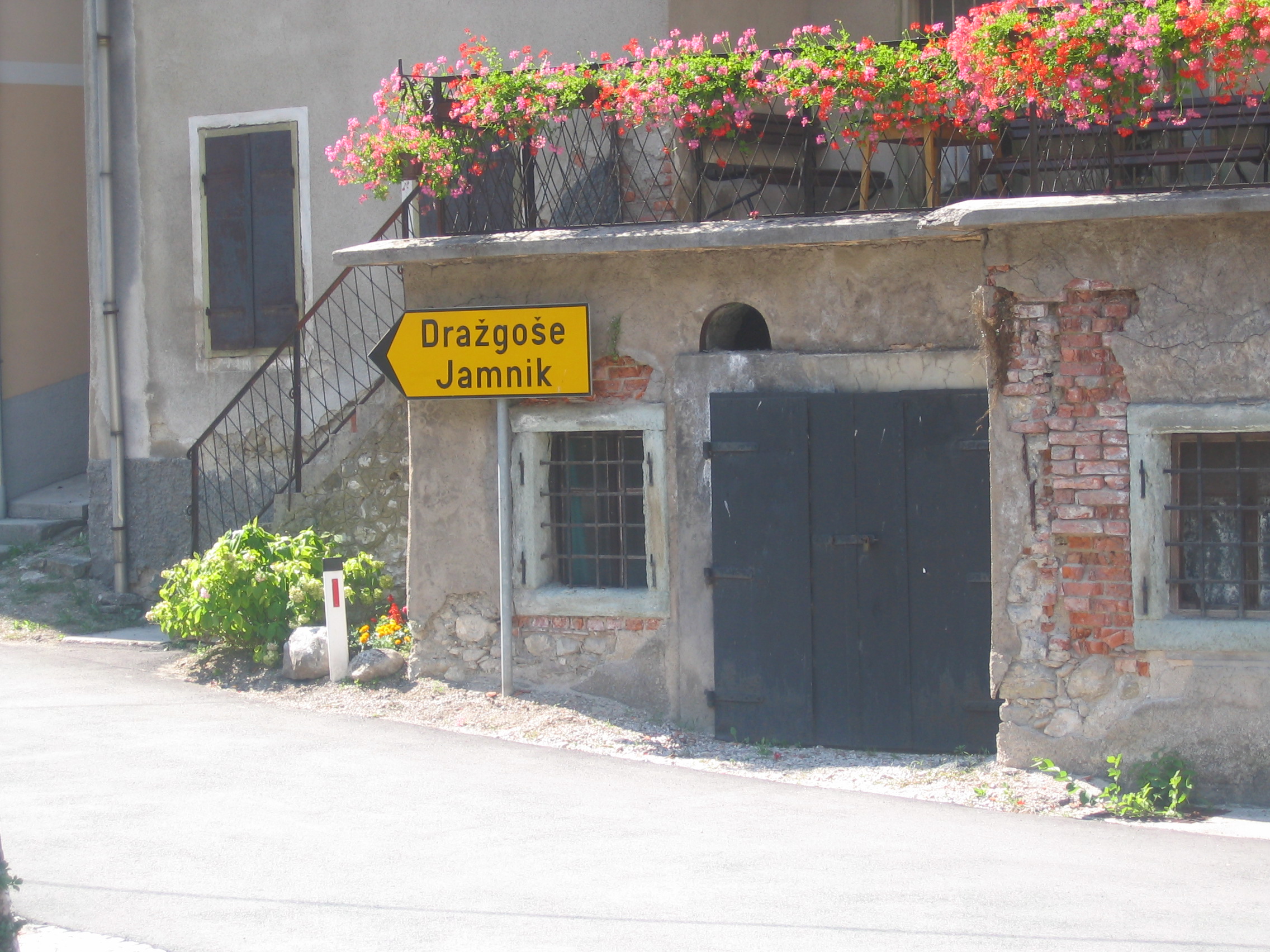
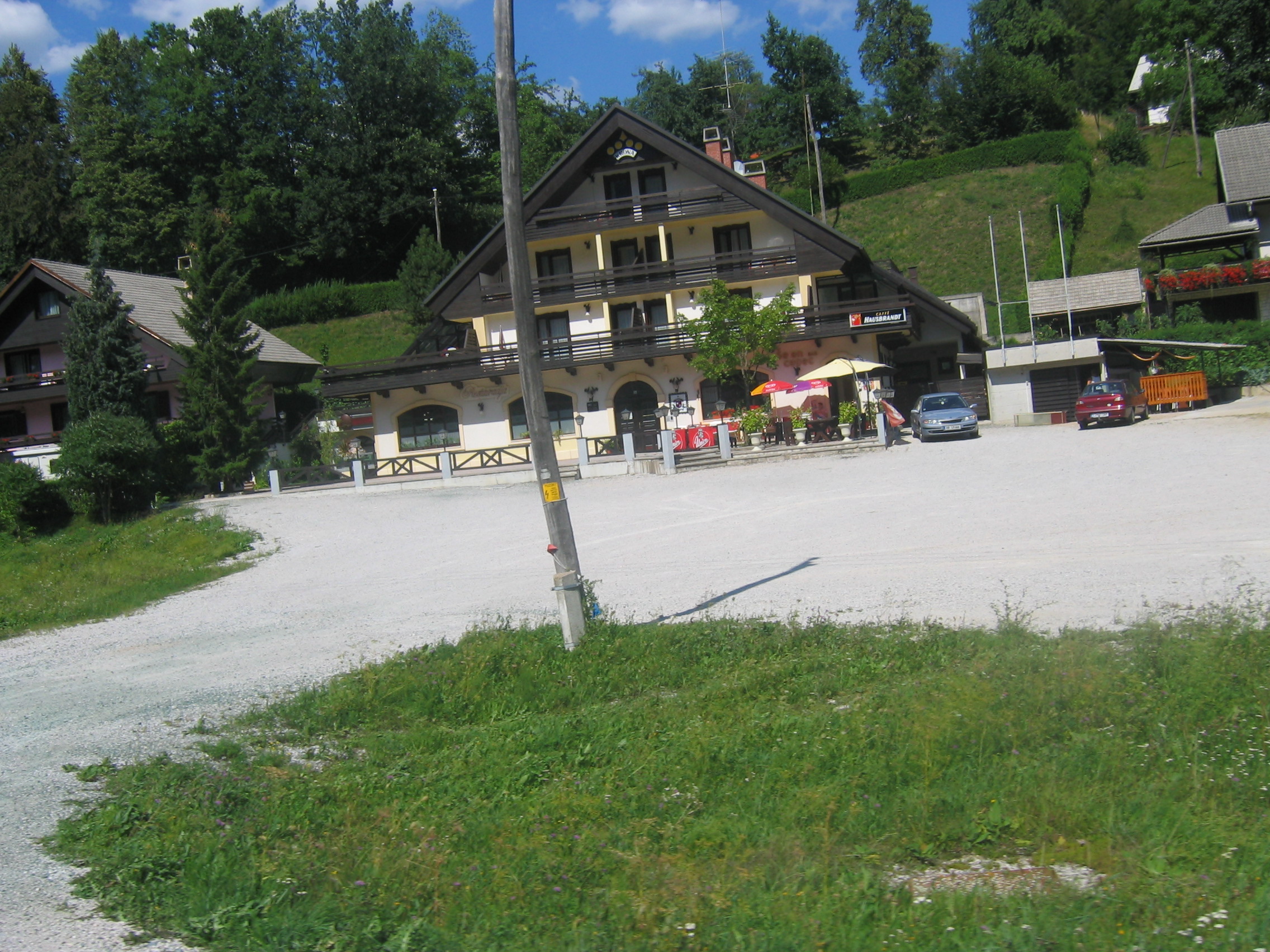
We begin the route at Bled. We ride along the old Betin slope; when we reach the bridge, we soon turn onto the cycle path and ride to the traffic-light junction. Here we turn right, ride past the railway line and straight on to the first crossroads. At the Frlic car dealership we turn left for the village of Hraše. Further on we come to the village of Rodine, we turn left for the village of Smokuč, through Žirovnica and along the main road to Jesenice.We continue the route along the main road Jesenice – Kr. Gora, and in the village of Belca we turn onto the cycle path and continue the route to Gozd Martuljek. There we turn round and cycle to the village of Dovje. Then we turn right for the village of Mojstrana. In the middle of the village at the signpost we turn for Bled, where a slightly longer and harder climb to the Kosmač pass awaits us. At the top we rest a little, because an 18 % descent into the village of Zgornja Radovna awaits us. There we can see the Pocar homestead, take refreshment in the Psnak inn and, through the picturesque valley of the river Radovna, through Krnica and Zgornje Gorje, return back to Bled.
The municipality of Žirovnica is full of cultural monuments. You can visit the homestead of Matija Čop, of Anton Janša (the first Slovenian beekeeper), to whom the beekeeping museum in Radovljica is also dedicated, the parish church, the church of St Martin, the church of St Radegund, the church of St Clement, in Vrba the homestead of France Prešeren,….
Gozd Martuljek is a stretched-out settlement in the municipality of Kranjska Gora. It lies on both banks of the river Sava Dolinka. Formerly the place was called Rute. The settlement is divided into Spodnje Rute, where the old farm homes are, and Zgornje Rute. Livestock breeding with Alpine pasturing is still important; tourism is developing. Here there are the hotel Špik, a campsite and quite a few holiday homes and cottages. From the northern slopes of the Martuljek group the waters flow into the Martuljek stream, on which there are two high waterfalls, and just below the village it flows into the Sava Dolinka. East of the settlement is the intermittent waterfall Lucifer (also called Mokre Peči). Along the Beli potok below Kukova špica (2427 m) there are numerous small waterfalls, called Skočniki.
The route will also take you through the village of Dovje. The parish church of St Michael in Dovje was built at the beginning of the 14th c. The styles are various, following one another from the Gothic onwards, since the church was rebuilt many times. The smithy Pr’ Katr’ in Dovje was restored with the help of the CRPOV programme (Integral programme of rural development and village renewal). The shop is in the lower part of the building, and in the upper part is a restored wooden room from the previous building. The monument to Jakob Aljaž was erected in 1989, on the 100th anniversary of Aljaž's arrival in Dovje. In Dovje he served between 1889-1927, right until his death. Besides being a parish priest, a composer (he set to music ‘Oj Triglav moj dom’) and a singer, he was an ardent mountaineering worker and an initiator of the building of mountain huts and paths. Probably his best-known act is the purchase of the land on the summit of Triglav from the municipality of Dovje in 1895 at his own expense. On 7 August 1895 he erected on the mountain a tower of thick galvanised sheet metal. The museum in Mojstrana was opened in 1984 in the former Jozl inn. In the collection material about the history of mountaineering in Slovenia is exhibited: about the first ascents of Triglav, the founding and activity of the Slovenian Mountaineering Society and its branches, the building of mountain huts, the Tourist Club Skala, the Mountain Rescue Service, Jakob Aljaž and a presentation of the Triglav National Park. The museum also keeps a collection of old alpinist equipment, old photographs of porters with loads, objects of old crafts… The Špan farm is said by oral tradition to be the oldest in Mojstrana. The name Špan is a frequent Slovenian house name, which indicates the important function of the master as the mayor of the place. The homestead was one of the wealthiest, since the family were engaged in carting (”furanje”). The house is an example of peasant Baroque, as shown by the paintings of various ornaments and the sundial on the façade from 1747.
Zgornja Radovna is a dispersed village along the river Radovna between Krma and Krnica. The Pocar homestead was set on a carefully chosen location: by the path that was led across the courtyard of the homestead. The dominant buildings were the residential house and the large farm building with a leaning woodshed and a smaller shed for small livestock, a small pigsty, a cart shed and an elongated hayrack. The buildings were mostly wooden, and absolutely all were covered with shingles or boards. The masonry single-storey residential building, dated with the year 1755 on a ceiling beam, is the oldest dated house in the upper Sava part of the Triglav National Park. The house has a traditional, varied ground plan, which derives from the central hall. In the homestead there is a museum, and in the farm building one of the information points of the park, which is regularly open in summer.
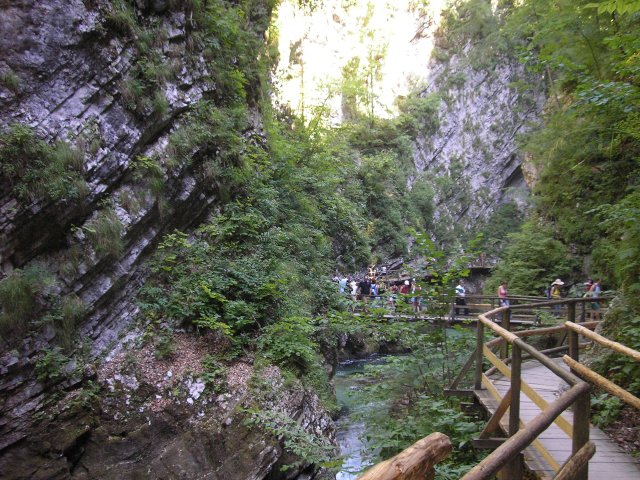
Near Gorje, about 4 km north-west of Bled, in February 1891 Jakob Žumer, the mayor of Gorje, and the cartographer and photographer Benedikt Lergetporer discovered the Vintgar gorge.
The Vintgar gorge, 1.6 km long, is cut between the vertical walls of the hills Hom and Boršt, and it is adorned by the Radovna with waterfalls, pools and rapids. The path leads over bridges and the so-called Žumer galleries and ends with a bridge above the mighty 16 m high river waterfall Šum. Because of its natural beauties the Vintgar has been ranked among the more important tourist attractions of Slovenia, and the number of visitors grows from year to year. In one direction of the visit to the gorge you can make use of the possibility of the “panoramic footpath” across Hom to St Catherine (a historic little church and a beautiful view). At the entrance and at the Šum waterfall you can take refreshment in the buffets.