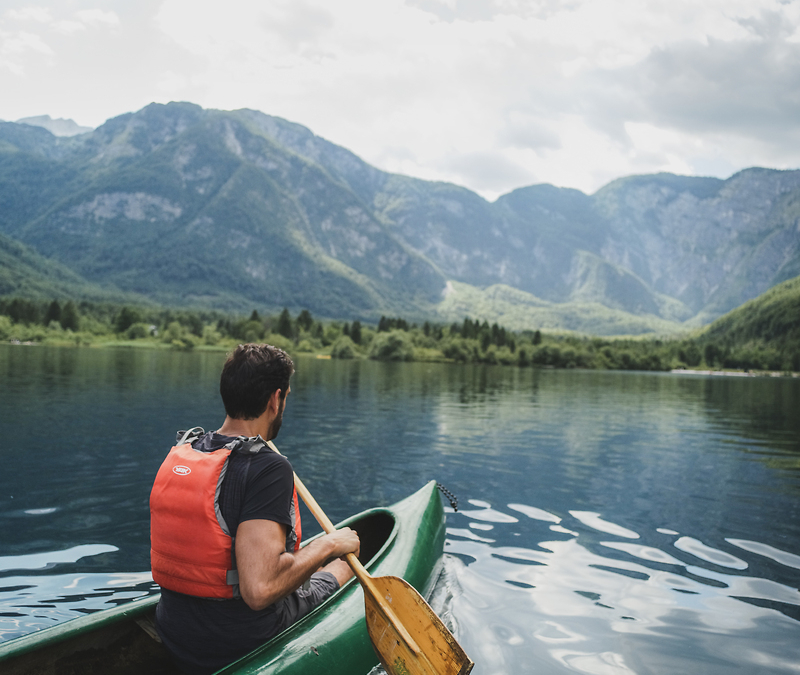
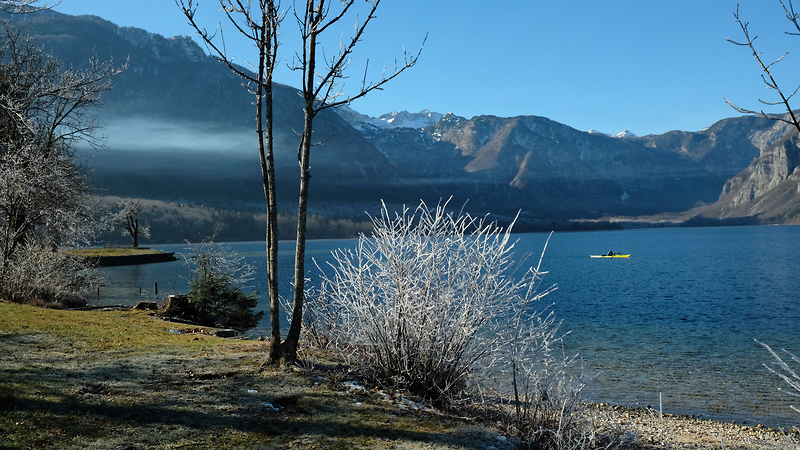
Lake Bohinj is the largest permanent lake in Slovenia and one of the loveliest, still genuine corners of the Julian Alps. It lies in the heart of the Triglav National Park, surrounded on three sides by high mountains that are mirrored in its calm, crystal-clear water. Unlike more crowded places, the pace here is as a rule unhurried, which makes Bohinj a favourite refuge of all who seek nature without noise and genuine contact with the mountain world.
On the eastern shore, at Ribčev Laz, stands a picturesque stone bridge and beside it the church of St John the Baptist, which is considered one of the most photographed images of the valley. It is from here that the view of the lake opens up as we know it from postcards. In summer the water warms up enough for swimming, and rowing, paddleboarding and quiet walks are also popular, or cycling on the shore, while anglers are drawn by the rich world of the lake and the surrounding rivers.
Bohinj is the starting point for countless activities in the mountains. Above the valley rises the skiing and viewing centre of Vogel, to which you travel comfortably by gondola lift and from where, in clear weather, the view opens onto Triglav and the whole valley. Not far away hides the Savica waterfall, which in the shape of the letter A descends from the rock face in two arms and feeds Lake Bohinj, out of which the river Sava Bohinjka then flows; and in the middle of lush forest the Mostnica gorge also beckons, with its pools and the famous Devil's Bridge. The hiking paths range from undemanding family walks to serious high-mountain tours, since the valley is one of the classic starting points for the ascent of Triglav, the highest Slovenian mountain.
In winter Bohinj settles under a blanket of snow. On Vogel and the nearby Soriška Planina open up ski resorts with a view, while the valley offers prepared cross-country trails, tobogganing and quiet winter walks. Mountain lovers set off from here into the famous Valley of the Triglav Lakes or onto the neighbouring Pokljuka plateau, and for families the water park with pools and saunas is popular throughout the year.
A particular charm of the valley is the historic Bohinj railway, which through tunnels and across bridges connects the place with the Littoral, and along it a museum steam train occasionally puffs as well. The western end of the lake at Ukanc is the starting point for the ascent to the Komna plateau and into the high mountains, and for the path to the Savica waterfall. The lake and the river Sava Bohinjka are renowned for fly fishing and a rich fish world, while along the shore stretch well-kept bathing areas and campsites that attract families in summer; whoever seeks peace finds a quiet corner just a few steps from the most visited spots.
Closely bound up with the place is the legend of Zlatorog, the white chamois with golden horns, who is said to have guarded the treasures of the Triglav range. The local story, told from generation to generation, still gives Bohinj a fairy-tale touch today and is part of the valley's rich shepherding and alpine-dairy heritage. That heritage is alive on the surrounding mountain pastures and in villages such as Stara Fužina and Studor with their characteristic hayracks, where you can get to know the tradition of cheese-making and the local the culinary offer, in which Bohinj cheese and mohant lead the way, while the shepherds' year is ceremonially rounded off each autumn by the Cows' Ball.
From Bohinj, routes lead deeper into the Julian Alps and towards the Soča Valley. In a little under half an hour's drive you reach the world-famous Bled, Bohinjska Bistrica with its railway station provides a link with the valley and the coast through the famous Bohinj tunnel.
If you are looking for a swim in the lake, a mountain tour or simply peace by the water, Bohinj is the right address in every season. Find accommodation by the lake and in the valley, stop at the restaurants and choose among the activities in Bohinj and the surrounding area.